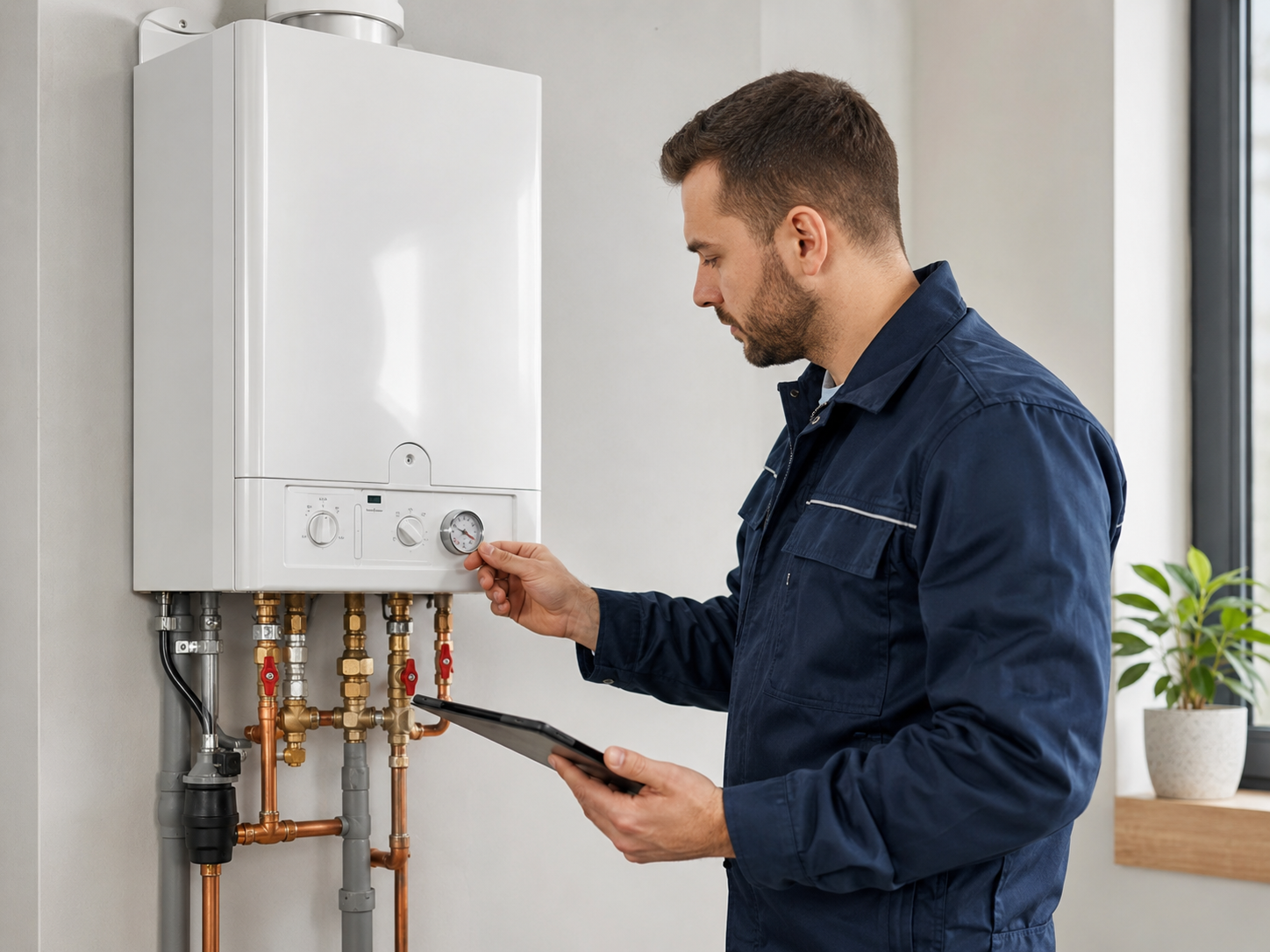
A gas boiler provides heating and hot water for an apartment, but if installed incorrectly, it can become a source of serious problems: gas leaks, carbon monoxide, water leaks, overheating, and damage to the heating system.
The main rule is simple: a gas boiler should not just turn on — it must operate safely. That is why installation, gas connection, burner adjustment, flue system, and repairs to the gas section must be carried out by a qualified specialist.
The apartment owner can only perform simple and safe checks: check the pressure, look at the error code on the display, reset the boiler according to the manual, make sure the heating valve is open, and check whether there is electricity.
Why You Should Not Install a Gas Boiler Yourself
A gas boiler is connected to several systems at once:
- gas pipe;
- heating system;
- cold water;
- hot water;
- electricity;
- flue or coaxial pipe;
- condensate drain, if the boiler is condensing.
A mistake in any of these parts can cause incorrect boiler operation or create a dangerous situation.
Mistakes related to gas, ventilation, and combustion product removal are especially dangerous. Carbon monoxide has no smell or color, so without a special detector, a person may not notice the problem.
Basic Rules for Gas Boiler Installation
Before installation, it is necessary to check:
- whether the selected boiler is suitable for the apartment;
- whether the flue or coaxial pipe can be installed correctly;
- whether there is air supply and ventilation;
- whether there is enough space for maintenance;
- whether the boiler power matches the apartment size;
- whether the heating system can withstand the operating pressure;
- whether there is grounding and stable power supply;
- whether condensate can be drained correctly;
- whether there is access to valves, filters, and the pressure gauge.
A boiler must not be installed “however it fits.” The fact that the boiler turns on does not mean that the installation was done correctly.
Common Mistakes During Gas Boiler Installation
1. Installation Without Checking the Room
One common mistake is installing the boiler without checking the room, ventilation, flue, and manufacturer requirements.
The problem may not appear immediately. The boiler may work at first, but later errors, poor ignition, smell, overheating, or frequent shutdowns may appear.
2. Incorrect Flue or Coaxial Pipe
Common mistakes include:
- the pipe is installed too close to a window or balcony;
- the slope is incorrect;
- unsuitable components are used;
- joints are not sealed properly;
- the pipe is too long for the specific model;
- the pipe outlet is blocked by the facade, grille, or balcony glazing;
- air intake or combustion product removal is disrupted.
As a result:
- the boiler may frequently show errors;
- ignition may become poor;
- loud popping sounds may appear during startup;
- combustion may worsen;
- the risk of combustion products entering the room may increase.
3. Boiler Hidden in a Cabinet Without Access
Sometimes the boiler is covered with furniture, a decorative panel, or placed in a very tight niche.
This is a mistake if there is no:
- access to valves;
- access to the pressure gauge;
- possibility to remove the cover;
- access to filters;
- space for maintenance;
- normal cooling of the casing and electronics.
If the boiler is fully built in, even simple diagnostics may require dismantling furniture.
4. Mistakes in the Heating System
Installers may connect the heating circuit incorrectly.
Common mistakes include:
- mixing up the supply and return pipes;
- not installing a dirt filter;
- not flushing the old heating system;
- leaving air in the radiators;
- connecting underfloor heating incorrectly;
- not checking the expansion vessel;
- not checking the safety valve;
- not installing service valves.
Because of this, the boiler may make noise, heat poorly, shut down frequently, overheat, or lose pressure.
5. No Dirt Filter Installed
Old radiators and pipes often contain rust, sand, and sludge. If a filter is not installed and the system is not flushed, dirt can enter the heat exchanger and pump.
Possible consequences:
- weak heating;
- noise inside the boiler;
- circulation errors;
- overheating;
- expensive heat exchanger repair.
6. Incorrect Condensate Drainage
Condensing boilers produce condensate. It must be drained correctly into the sewage system.
Common mistakes:
- no slope;
- the pipe is crushed;
- water drains into the wrong place;
- no access for cleaning;
- a thin pipe clogs quickly;
- condensate flows onto the wall or floor.
If condensate does not drain properly, the boiler may stop with an error.
Signs of Incorrect Installation
Pay attention if:
- the boiler often shows an error;
- popping sounds are heard during startup;
- there is a smell of gas;
- the flame is unstable;
- hot water comes in bursts;
- radiators heat unevenly;
- pressure constantly drops;
- water drips from the boiler or pipes;
- soot appears;
- windows fog up heavily;
- the carbon monoxide detector activates.
If there is a gas smell, soot, loud startup noise, or the carbon monoxide detector goes off, it is better to turn off the boiler and call a specialist.
What to Do If Gas Was Turned Off and the Boiler Does Not Start
After a gas supply interruption, the boiler may show an ignition error. This does not always mean the boiler is broken.
Safe steps you can take:
- Ventilate the room.
- Make sure there is no gas smell.
- Check whether the gas valve near the boiler is open.
- Check whether there is electricity.
- Press the Reset button according to your model’s manual.
- Wait for the boiler to restart.
If the boiler does not start after 1–2 attempts, do not keep pressing Reset repeatedly.
Possible causes:
- gas has not yet returned;
- air remains in the gas line;
- ignition electrode problem;
- dirty flame sensor;
- gas valve fault;
- control board problem.
In this case, a technician is needed.
Low Pressure in the Heating System
One of the most common reasons a boiler stops is low pressure in the heating system.
For most domestic boilers, normal pressure in a cold system is usually around 1–1.5 bar, but the exact value should be checked in the manual for your specific model.
Signs of low pressure:
- the boiler does not start;
- a pressure error appears on the display;
- radiators heat poorly;
- hot water works unstably;
- the pressure gauge needle is below the working range.
What you can do:
- Check the pressure on the pressure gauge.
- Find the system filling valve.
- Slowly add water until the required pressure is reached.
- Close the filling valve.
- Reset the boiler if the manual allows it.
Important: if the pressure drops again after one or several days, this is not normal. Possible causes include a leak, air in the system, a faulty expansion vessel, safety valve problem, or heat exchanger issue.
Boiler Pressure Is Too High
High pressure is also dangerous.
Possible causes:
- the filling valve was left open;
- the system was overfilled with water;
- the expansion vessel is faulty;
- water expands when heated;
- part of the system is blocked;
- the heat exchanger is faulty;
- the safety valve does not work.
If the pressure approaches the red zone or water drips from the valve, it is better to call a technician.
Do not dismantle the boiler or drain water yourself without understanding the system layout.
The Boiler Works, but Radiators Are Cold
Possible causes:
- radiator valves are closed;
- there is air in the radiators;
- pressure is low;
- the filter is clogged;
- the pump is not working;
- the thermostat is set incorrectly;
- the boiler is in hot-water-only mode;
- the heating system is connected incorrectly.
You can check:
- whether heating mode is enabled;
- whether radiator valves are open;
- whether the room thermostat works;
- whether the system pressure is normal.
If this does not help, a technician is needed.
The Boiler Makes Noise
Noise can be different:
- humming;
- whistling;
- clicking;
- knocking;
- boiling-like sound;
- vibration.
Possible causes:
- air in the system;
- dirt in the heat exchanger;
- weak circulation;
- scale buildup;
- incorrect pump setting;
- excessive boiler power;
- burner problem.
If the noise appeared after installation or repair, an installation or adjustment mistake is likely.
Hot Water Is Sometimes Hot and Sometimes Cold
If water from the tap alternates between hot and cold, the reasons may include:
- clogged heat exchanger;
- weak water pressure;
- dirty flow sensor;
- temperature set incorrectly;
- fluctuating gas pressure;
- faulty three-way valve;
- boiler incorrectly adjusted.
The user can only check water pressure, temperature settings, and the condition of an accessible filter, if there is one.
Sensors, valves, and the heat exchanger should be checked by a specialist.
When to Turn Off the Boiler Immediately
Turn off the boiler immediately and call a specialist if:
- there is a gas smell;
- the carbon monoxide detector goes off;
- soot appears;
- the flame becomes yellow, red, or unstable;
- the boiler makes loud popping sounds during startup;
- water leaks from the boiler;
- pressure rises quickly;
- the casing becomes very hot;
- the boiler constantly shows the same error;
- headache, weakness, or nausea appears after the boiler starts.
These symptoms must not be ignored.
Do You Need a Carbon Monoxide Detector?
Yes. In an apartment with a gas boiler, a carbon monoxide detector is a reasonable safety measure.
It is important to understand: a gas detector and a carbon monoxide detector are different devices.
- A gas detector reacts to a gas leak.
- A carbon monoxide detector reacts to products of incomplete combustion.
A detector does not replace proper boiler installation and maintenance, but it can warn you about danger in time.
What a Technician Should Do During Boiler Maintenance
Scheduled maintenance usually includes:
- external inspection of the boiler;
- checking errors;
- checking the burner;
- checking the heat exchanger;
- checking pressure in the expansion vessel;
- checking the pump;
- checking filters;
- checking the flue or coaxial system;
- checking joint tightness;
- checking safety sensors;
- adjusting heating and hot water operation;
- checking for leaks.
Maintenance should preferably be carried out at least once a year, especially before the heating season.
What the User Can Do Themselves
Safe actions include:
- checking the error code;
- reading the manual;
- checking pressure on the pressure gauge;
- opening a heating valve that was accidentally closed;
- filling the system with water to normal pressure;
- pressing Reset once according to the manual;
- checking the batteries in the room thermostat;
- making sure the boiler is plugged in;
- checking the circuit breaker in the electrical panel;
- clearing the space around the boiler.
If the error repeats, it is better to call a technician.
What You Must Not Do Yourself
Do not do the following yourself:
- dismantle the gas section;
- replace the gas valve;
- adjust the burner;
- modify the flue;
- move the boiler;
- replace the gas pipe;
- disable safety sensors;
- close ventilation;
- start the boiler when there is a gas smell;
- keep pressing Reset when the same error repeats.
These jobs must be done by specialists.
Frequently Asked Questions
Can I Install a Gas Boiler Myself?
No. Gas equipment must be installed by a qualified specialist. DIY installation is dangerous and may cause a gas leak, incorrect combustion, or carbon monoxide poisoning.
Why Does the Boiler Show an Error After Gas Was Turned Off?
Most often, the boiler failed to ignite. After gas supply is restored, you can press Reset according to the manual. If the error repeats, a specialist is needed.
Why Does the Pressure Keep Dropping?
The usual causes are a leak, air in the system, expansion vessel problem, safety valve issue, or heat exchanger fault. If pressure drops regularly, simply adding water is a poor solution.
Can the Boiler Be Hidden in a Cabinet?
Only if the manufacturer’s instructions are followed. There must be clearances, ventilation, access to valves and the pressure gauge, and the possibility of maintenance. The boiler must not be completely sealed inside furniture.
Why Does the Boiler Make a Loud Popping Sound During Startup?
This may be related to ignition, gas supply, the burner, electrode, or incorrect adjustment. This symptom should not be ignored.
How Often Should a Boiler Be Serviced?
Usually at least once a year. It is best to service the boiler before the heating season starts.
Summary
A gas boiler must be installed and serviced by a specialist. The apartment owner can monitor pressure, check errors, check the thermostat, and perform a simple Reset according to the manual.
But everything related to gas, the burner, the flue, and combustion products must be checked by a technician.
Correct boiler installation is not only about heating and hot water — it is about apartment safety. Installation mistakes may not appear immediately, so after installation it is important to keep the documents, check the system operation, and not postpone maintenance.