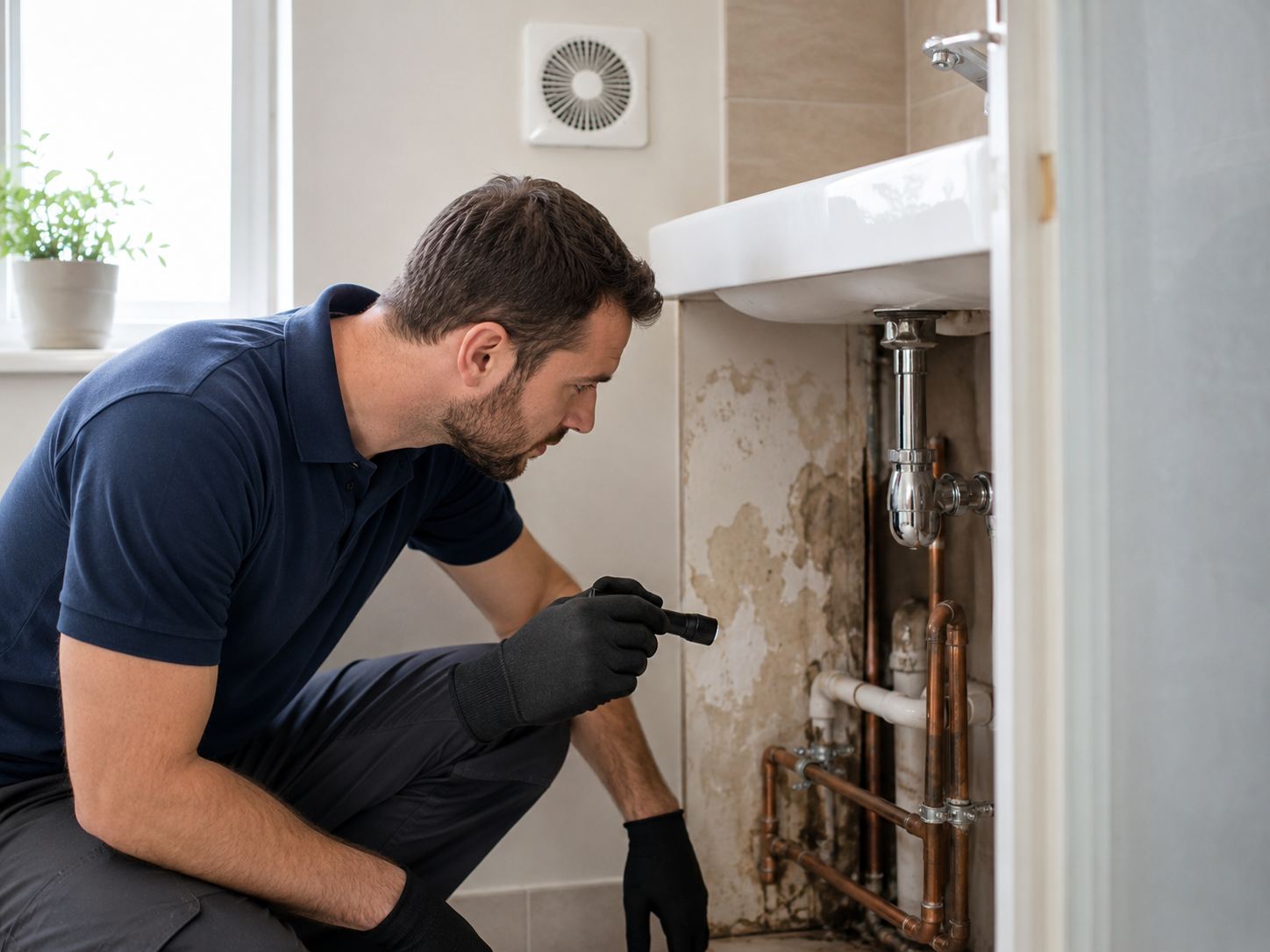
Mold in an apartment is not just an unpleasant stain on a wall or ceiling. In most cases, it is a sign of constant moisture: a leak, condensation, poor ventilation, or water collecting inside walls, floors, ceilings, or hidden cavities.
In Batumi, this problem is especially common. The city is located by the sea, the climate is humid, rain is frequent, and many apartments have air conditioners, enclosed balconies, stretch ceilings, and hidden pipework. Because of this, mold can appear even in a new apartment.
The main rule is simple: if you only remove the visible stains but do not eliminate the source of moisture, the mold will return.
Why Mold Appears
Mold needs three main conditions to grow:
- moisture;
- poor air circulation;
- a surface where fungus can grow: plaster, paint, drywall, wood, wallpaper, silicone, or tile grout.
Mold spores are almost everywhere, and it is impossible to remove them completely from the air. But they begin to grow actively only where there is moisture.
The most common causes of mold in apartments are:
- small pipe leaks;
- leaks under the bathtub, shower cabin, sink, or kitchen sink;
- condensation on cold water pipes;
- poor ventilation in the bathroom and kitchen;
- water inside walls, floors, or ceiling cavities;
- incorrect air conditioner drainage;
- cold walls or thermal bridges;
- furniture placed too close to an exterior wall;
- drying laundry indoors too often;
- flooding from neighbors;
- old silicone and damaged grout in the bathroom.
Why Mold Appears More Often in Batumi
In a dry climate, small amounts of moisture can evaporate quickly. In Batumi, this is more difficult because the air is often humid, especially near the sea, after rain, and in poorly ventilated apartments.
That is why even a small problem can quickly turn into mold:
- a pipe slightly “sweats”;
- there is a small leak under the bathtub;
- ventilation barely works;
- humid air stays in the bathroom after a shower;
- air does not move behind a wardrobe or kitchen furniture.
After a few weeks, you may notice a damp smell, dark stains, swollen paint, or wet corners.
Leaks: The Most Common Hidden Cause
Mold often appears not simply because of “humid air,” but because of a small, constant leak.
Slow dripping leaks are especially dangerous. They may be almost invisible, but they wet the wall, floor, or hidden niche every day.
Check:
- connections under the sink;
- siphon;
- flexible hoses;
- washing machine connections;
- pipes under the bathtub;
- shower drain;
- toilet and cistern;
- riser pipe;
- manifold cabinet;
- areas around the heated towel rail;
- air conditioner drainage.
Signs of a hidden leak:
- damp smell without visible water;
- wet baseboard;
- swollen paint;
- dark stains near the floor;
- tiles sound hollow when tapped;
- wet silicone;
- mold returns after cleaning;
- the water meter moves slowly when all taps are closed.
In this situation, it is better to call a plumber. Simply treating the wall will not help while water continues to enter the structure.
Condensation on Pipes: Why Pipes “Sweat”
Condensation on cold water pipes is common in Batumi. It happens when a cold pipe passes through a warm and humid space. Moisture from the air settles on the pipe as water droplets.
This is often seen:
- in the bathroom;
- in the toilet;
- in a technical cabinet;
- under the kitchen sink;
- near riser pipes;
- behind drywall boxes;
- in poorly ventilated niches.
If the pipe is constantly wet, water runs down and wets walls, floors, tile adhesive, drywall, or furniture. Over time, mold appears.
The solution is not just to wipe the pipe. You need to:
- check that there is no actual leak;
- insulate cold water pipes;
- use moisture-resistant thermal insulation;
- seal the insulation joints properly;
- keep access for inspection;
- improve ventilation inside the niche or cabinet.
Pipe insulation is especially important where pipes are hidden inside closed boxes. If a wet pipe is closed without insulation, the problem may get worse: water will collect inside, and mold may remain hidden for a long time.
Water in Hidden Cavities
Sometimes mold is visible on the wall, but the source of moisture is somewhere else.
Water can collect:
- under the bathtub;
- under the shower cabin;
- behind kitchen furniture;
- under laminate flooring;
- behind drywall;
- above a stretch ceiling;
- inside a pipe box;
- inside tile joints;
- in empty spaces around a riser pipe.
This problem is dangerous because the apartment may look normal from the outside. But inside, materials remain wet, a smell appears, finishes get damaged, and mold grows.
If there is a damp smell but almost no visible stains, hidden areas should be checked. A repair specialist can open an inspection hatch, check pipes, the siphon, drainage, wall moisture, and the condition of the floor.
Poor Ventilation
Mold can appear even without leaks if ventilation does not work properly.
Common mistakes include:
- the ventilation grille is covered by furniture or a decorative panel;
- the ventilation duct is blocked;
- there is no gap under the bathroom door;
- the exhaust fan is too weak;
- the fan is rarely turned on;
- windows are always closed;
- the balcony is insulated, but ventilation was not planned.
A simple test: hold a sheet of paper near the ventilation grille. If there is airflow, the paper should stick to it. If the paper falls or air blows back into the room, the ventilation should be checked.
For a bathroom, it is better to use an exhaust fan with a timer or humidity sensor. It should work not only during the shower, but also after it.
Air Conditioner and Mold
An air conditioner can help dry the air, but if it is not maintained properly, it can become a source of smell and moisture itself.
Possible problems include:
- clogged drainage;
- water dripping from the indoor unit;
- dirty filters;
- mold inside the indoor unit;
- incorrectly installed drain pipe;
- installation mistakes with the outdoor unit or pipe route.
If a damp smell appears after turning on the air conditioner, the indoor unit needs cleaning. If water drips into the room or onto the wall, the drainage system must be checked.
Does an Ozone Generator Help Against Mold?
An ozone generator is a questionable solution. It may temporarily reduce odor, but it does not solve the main cause of mold: moisture.
If there is still a leak, a wet wall, condensation on pipes, or poor ventilation, mold will appear again.
It is important to understand:
- ozone does not remove the source of moisture;
- ozone does not replace repair, drying, and ventilation;
- ozone can be dangerous for people, animals, and plants;
- at safe concentrations, it is not a reliable method for removing mold;
- mold may remain deeper inside porous materials.
Therefore, an ozone generator should not be considered the main method for fighting mold. First, you need to find the source of moisture, eliminate it, dry the materials, and only then think about additional odor treatment.
What You Can Do Yourself
If the mold area is small and the cause is clear, some work can be done yourself.
You can:
- remove small stains from tiles, glass, or plastic;
- wash the surface with a suitable cleaning product;
- replace old silicone in the bathroom;
- ventilate the room more often;
- use a dehumidifier;
- avoid drying laundry in a closed room;
- move wardrobes away from exterior walls;
- check the ventilation grille;
- clean air conditioner filters.
But caution is important. When cleaning, use gloves, protective glasses, and a mask. Do not mix different cleaning products, especially chlorine-based products with ammonia or other cleaners.
When to Call a Repair Specialist
It is better to call a specialist if:
- mold returns after treatment;
- there is a damp smell, but the source is not visible;
- the wall or floor gets wet;
- there is a suspected leak;
- mold appeared near pipes;
- the air conditioner is dripping;
- the ceiling gets wet after rain or because of neighbors;
- silicone around the bathtub turns black;
- paint or plaster is swelling;
- mold is behind furniture, kitchen cabinets, drywall, or a stretch ceiling;
- the affected area is large.
In such cases, you need more than cleaning. You need diagnosis of the cause.
You may need:
- a plumber;
- a ventilation specialist;
- an air conditioner technician;
- a waterproofing specialist;
- a bathroom repair specialist;
- a finishing specialist to restore walls after drying.
How a Specialist Can Solve the Problem
Depending on the cause, a specialist can:
- find a leak;
- replace the siphon, hoses, or connections;
- seal the bathtub or shower;
- replace old silicone;
- repair air conditioner drainage;
- insulate cold water pipes;
- install an inspection hatch;
- improve ventilation;
- dry the problem area;
- treat the surface with an anti-mold product;
- restore plaster, paint, or tiles.
The correct order of work is:
- Find the source of moisture.
- Eliminate the leak, condensation, or ventilation problem.
- Dry the materials.
- Remove damaged areas.
- Treat the surface.
- Restore the finish.
- Check whether moisture returns.
If you skip these steps and simply paint the wall, the problem will most likely return.
How to Prevent Mold
To reduce the risk of mold:
- ventilate the apartment every day;
- use the extractor fan in the bathroom and kitchen;
- do not cover ventilation grilles;
- leave the bathroom door open after a shower;
- check pipes under sinks;
- inspect areas behind furniture every few months;
- do not place wardrobes too close to cold walls;
- insulate cold water pipes in closed niches;
- service the air conditioner regularly;
- fix even small leaks immediately;
- use a dehumidifier if humidity stays high.
For control, you can buy a simple hygrometer. If humidity in the apartment remains high for a long time, the risk of mold increases significantly.
Frequently Asked Questions
Can I Just Paint Over Mold?
No. Paint will only hide the stains temporarily. If moisture remains inside the wall or under the finish, mold will appear again.
What Is Better: an Ozone Generator or a Dehumidifier?
For moisture prevention, a dehumidifier is more useful. An ozone generator does not solve humidity problems and does not replace repair. If there is a leak or condensation, these must be fixed first.
Do I Need to Remove Wallpaper or Drywall?
If the material is heavily affected or has been wet for a long time, it often needs to be removed. In porous materials, mold can grow deeper than the visible surface.
Why Does Mold Appear Behind a Wardrobe?
There is little air movement behind a wardrobe. If the wall is cold or damp, condensation forms easily. It is better to move the wardrobe at least a few centimeters away from the wall.
Why Does Mold Appear in the Bathroom?
The main reasons are steam, poor ventilation, old silicone, leaks under the bathtub or shower, and condensation on pipes.
Summary
Mold in apartments in Batumi is most often connected with moisture: leaks, condensation, poor ventilation, or water collecting in hidden cavities. Treating the walls is effective only when the real cause has already been eliminated.
If mold returns, there is a damp smell, or walls and pipes get wet, it is better to call a specialist. A plumber, air conditioner technician, or ventilation specialist can help find and eliminate the source of the problem instead of simply hiding the stains temporarily.